A lost harvest
The shadow of war looms
over Lebanese farmers
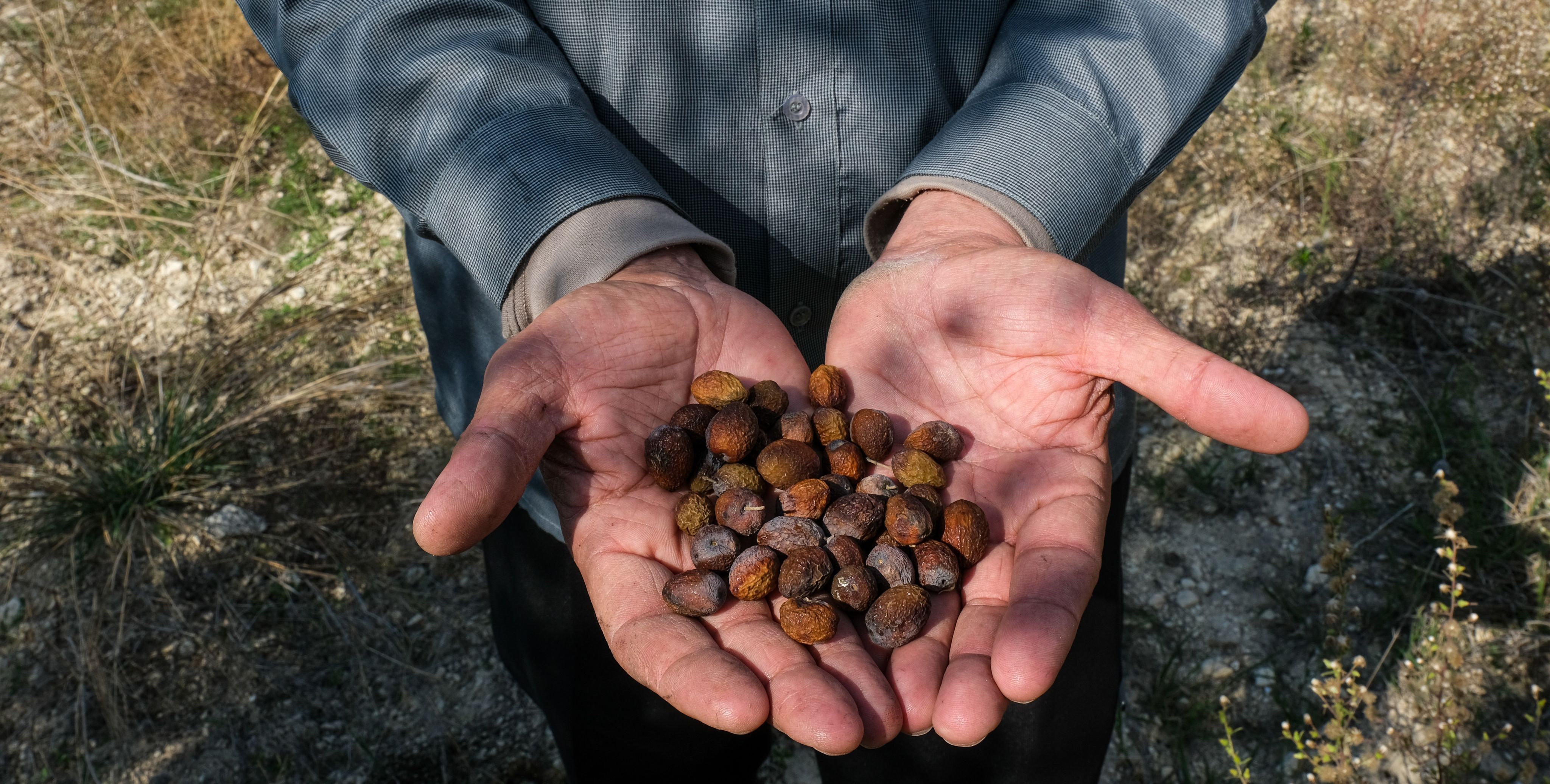

History is rooted in the land beneath the ash-covered olive groves and parched fields of Lebanon, where generations have worked, planted and harvested. These fields, once vital to Lebanon’s economy and heritage, now stand as silent witnesses to devastation, disrupted by the scars of war. For many farmers, what will come next is uncertain.
The recent war on Lebanon has devastated the country’s agricultural heartland, obliterating centuries-old olive groves, vital crops and the livelihoods of countless farming families. Israeli forces targeted fields with incendiary weapons, destroying 340,000 farm animals, 47,000 olive trees and nearly 2,000 acres of agricultural land, according to the Food and Agriculture Organization of the United Nations and the Lebanese Ministry of Agriculture.

A Lebanese farmer holds burnt olives among the charred remains of olive trees in southern Lebanon. Photo: Zaynab Mayladan/NRC
A Lebanese farmer holds burnt olives among the charred remains of olive trees in southern Lebanon. Photo: Zaynab Mayladan/NRC
Olive trees cover 22 per cent of the country’s total agricultural area. More than 50 per cent of Lebanese farmers work with this crop – almost 100,000 people. These farmers now face the dual challenge of rebuilding their lives and restoring their land, often without the necessary resources or support.
Dozens of villages remain inaccessible due to Israeli-enforced prohibitions, leaving thousands of people displaced
Southern border villages have borne the brunt of this devastation. Despite the ceasefire of 27 November 2024 and the withdrawal of the Israeli troops from parts of the area that was occupied, dozens of villages remain inaccessible due to Israeli-enforced prohibitions, leaving thousands of people displaced. Daily bombardments have continued, killing or injuring dozens and leaving crops – the foundation of the local economy – in ruins. Losses have been estimated at over USD 1 billion.
Sixty-six days without water
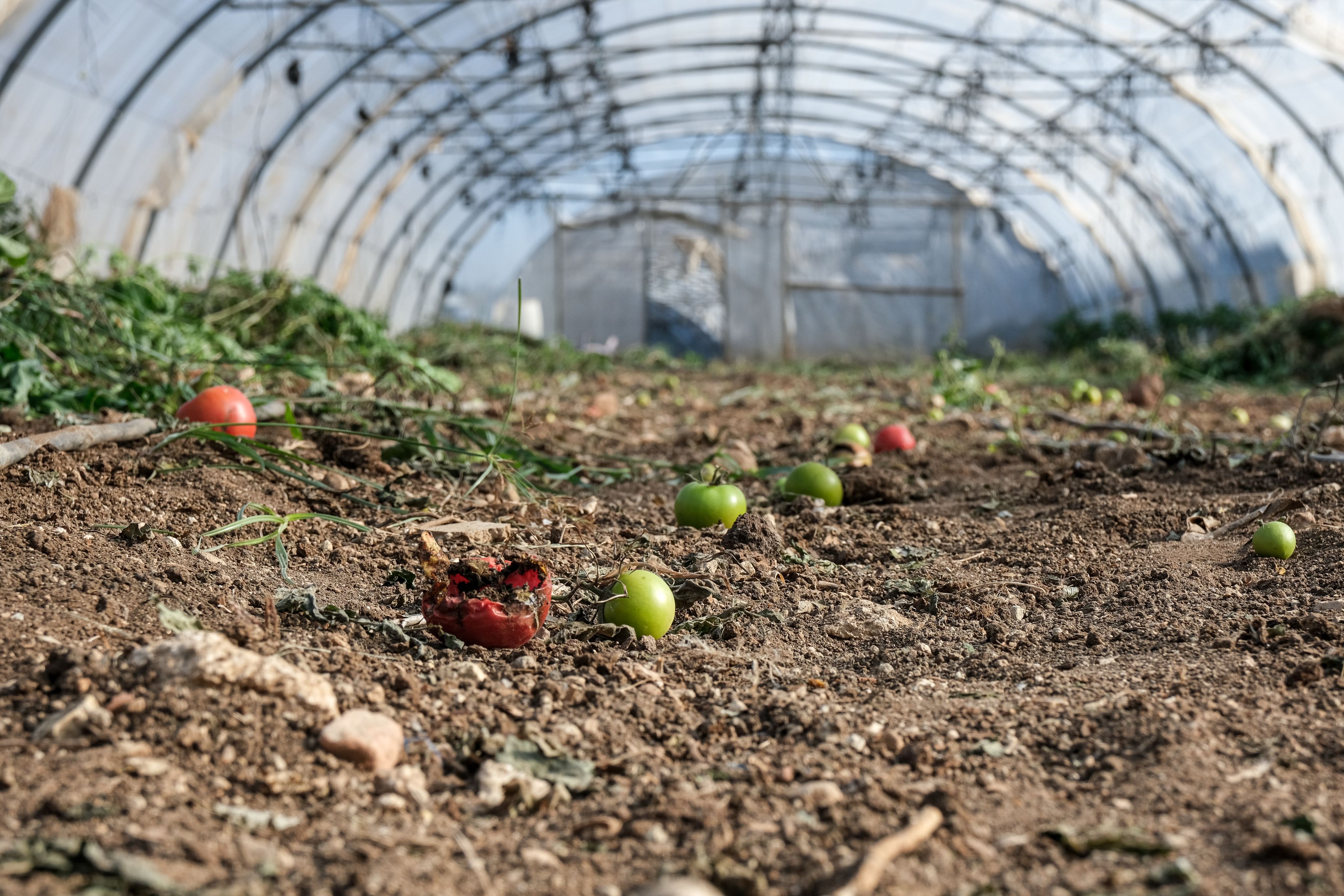
Hekmat, a farmer from Al-Matariyyah in south-west Lebanon, owns fields where he grows tomatoes, watermelons, aubergines and other crops. Each September, he begins a meticulous cycle of planting – a process that demands intense labour, resources and care. The peak harvest season, running from December through March, used to see his fields bustling with workers and yielding a bountiful crop. But in 2024, the war brought devastation to his fields.
“The shelling was intense. We received warnings, and the village was attacked several times. I stayed to check on my crops, but for 66 days, I couldn’t water them or take care of them,” Hekmat recounts. Despite his best efforts, the plants suffered greatly.
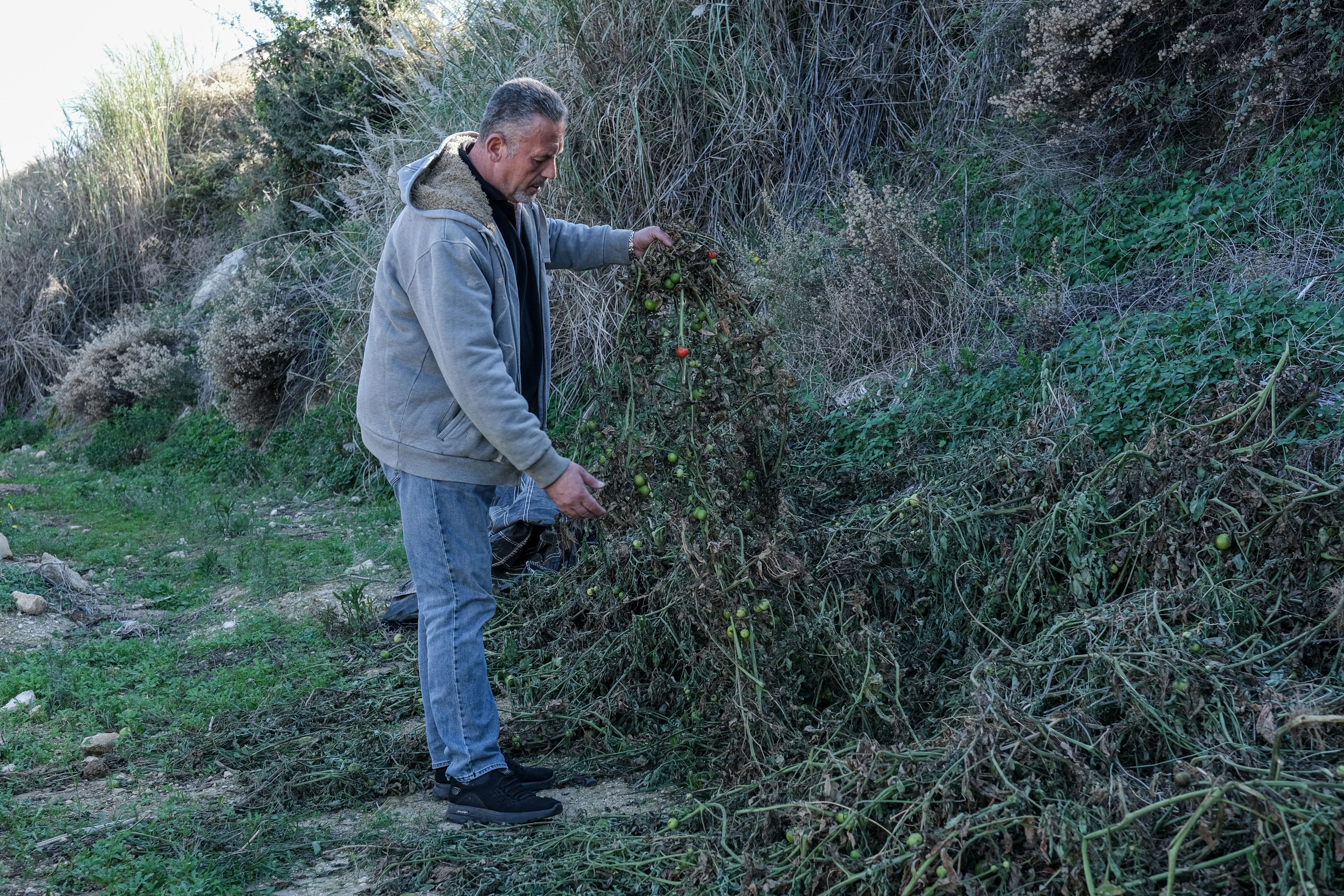
Hekmat holds wilted tomato vines from his fields. Photo: Zaynab Mayladan/NRC
Hekmat holds wilted tomato vines from his fields. Photo: Zaynab Mayladan/NRC
The war’s timing was particularly cruel. Hekmat began planting in September, after weeks of preparation, but the 66 days without water left his crops devastated. “Planting isn’t just about sowing seeds – it’s months of preparation and labour. This year, everything we invested is gone.”
The few tomato plants that survived were a miracle. “They had no water, no chemicals, no pesticides – nothing,” Hekmat says, pointing to the small amount harvested. His 10 tomato tents, which would usually produce 1,300 boxes, yielded only a fraction of their normal output.
“This project cost me $10,000. Now, I owe money to the wholesalers. We live on seasonal debts, paying them off with our harvests. This year, there’s almost nothing to pay with.”
Hekmat has been farming since 2011, when he purchased the land that now supports his family and his brother’s family. “This is my only income. Farming doesn’t make you rich, but it provides a living. Now, even that is gone,” he says.
Farmers like Hekmat are scared to plant again. There’s no security now, no guarantees of a strong harvest. “This soil is our life,” he says, standing among his battered fields.

Olive farmers in crisis
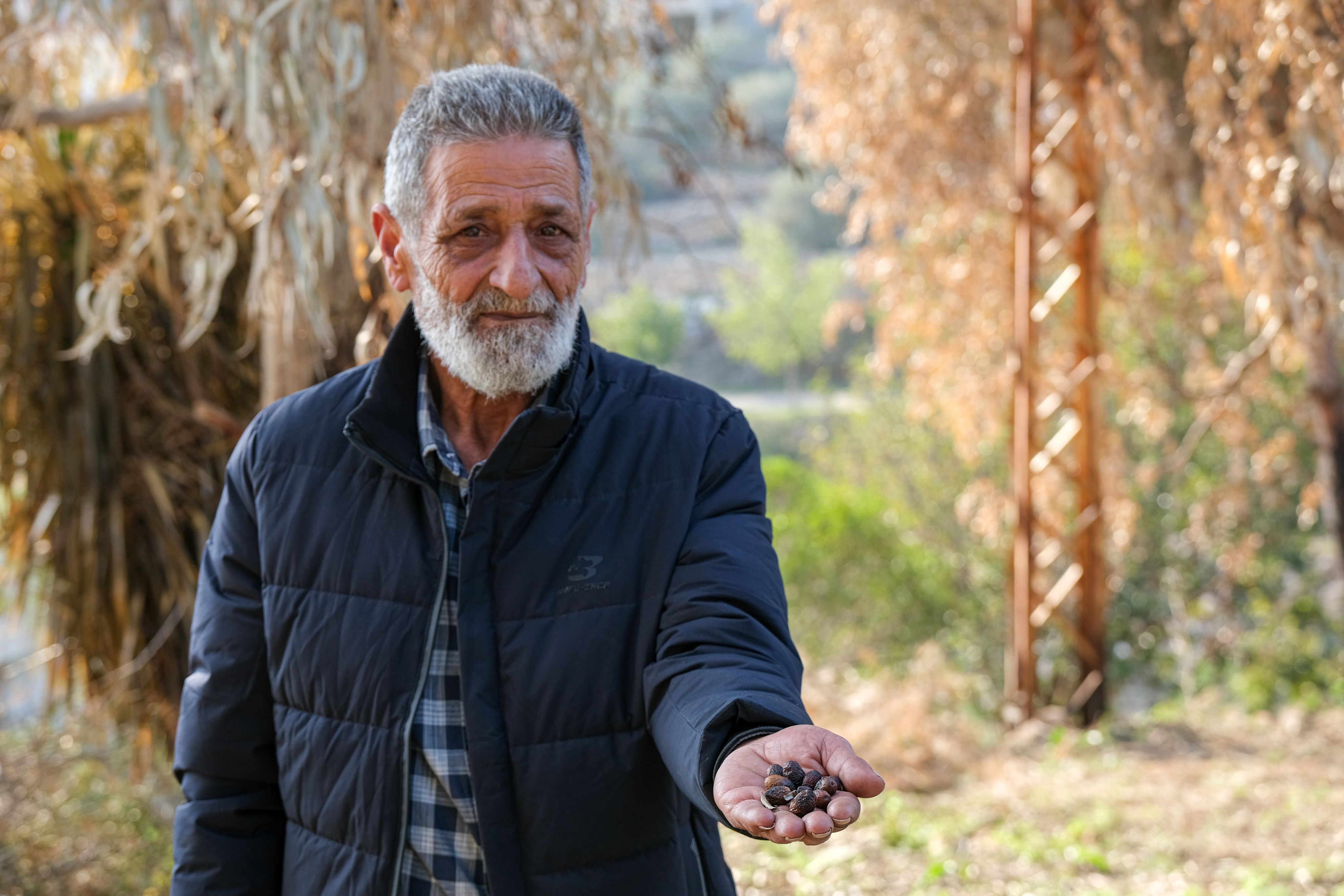
Olive farming is a calling deeply rooted in Lebanese tradition. Ismail, a Lebanese farmer, owns 500 olive trees in Jouaiya, south-west Lebanon. He returned to the country in 2016, having worked in Africa for most of his life. “I wanted to honour the land. The olive tree is sacred. My father planted olives, and his love for them inspired me,” he says.
“Farming is not just about income. It is about giving back.”
Over the years, Ismail has worked on neglected lands, creating jobs for 12 to 15 families in his community – but the war brought massive losses. “We expected 120 tanks of olive oil this year; instead, we harvested barely 20 tanks. What survived was less than 15 per cent of what we planted,” he says.
Some of his oldest olive trees, standing for over 80 years, have been damaged. “These trees carry history. They are a legacy,” he explains.
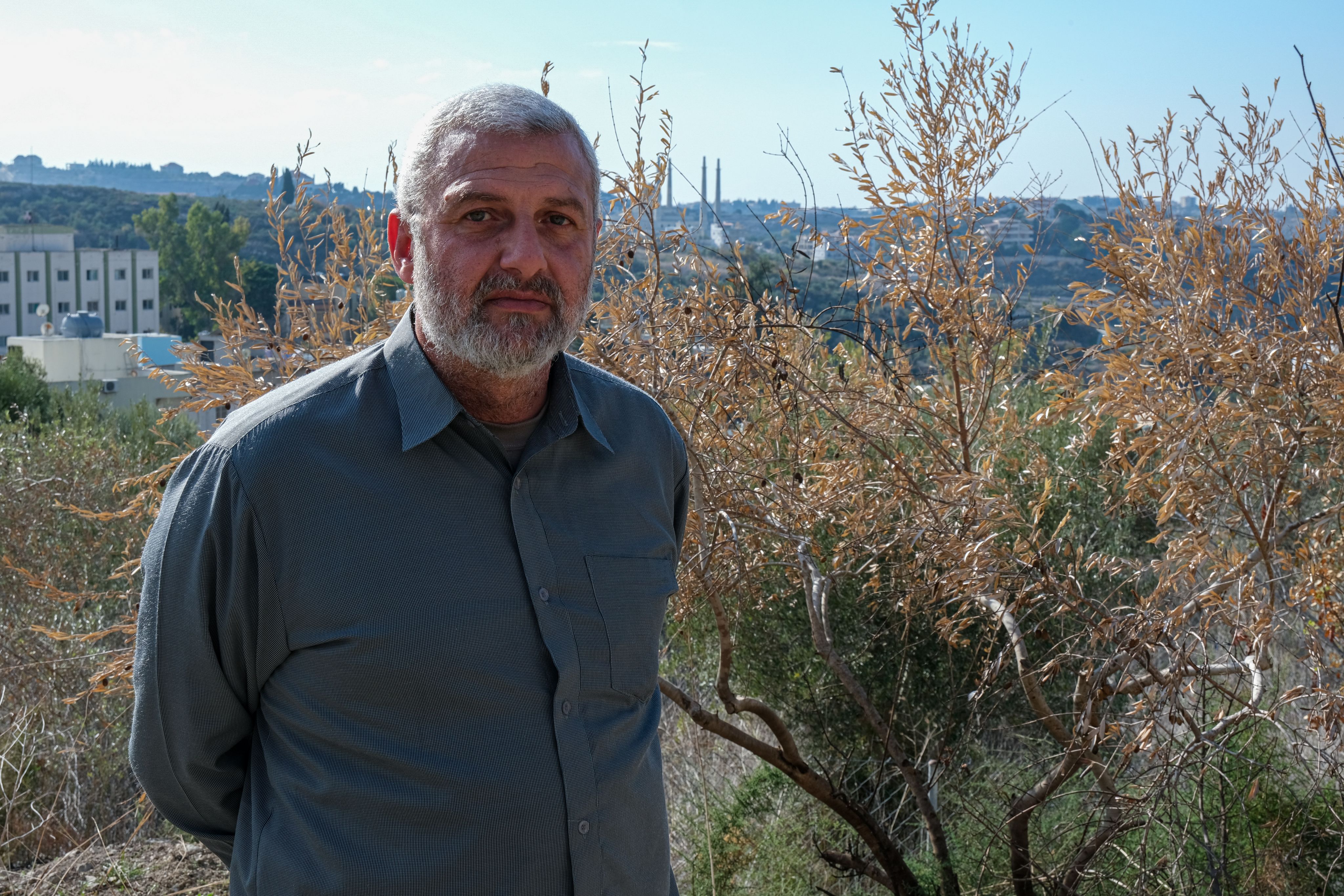
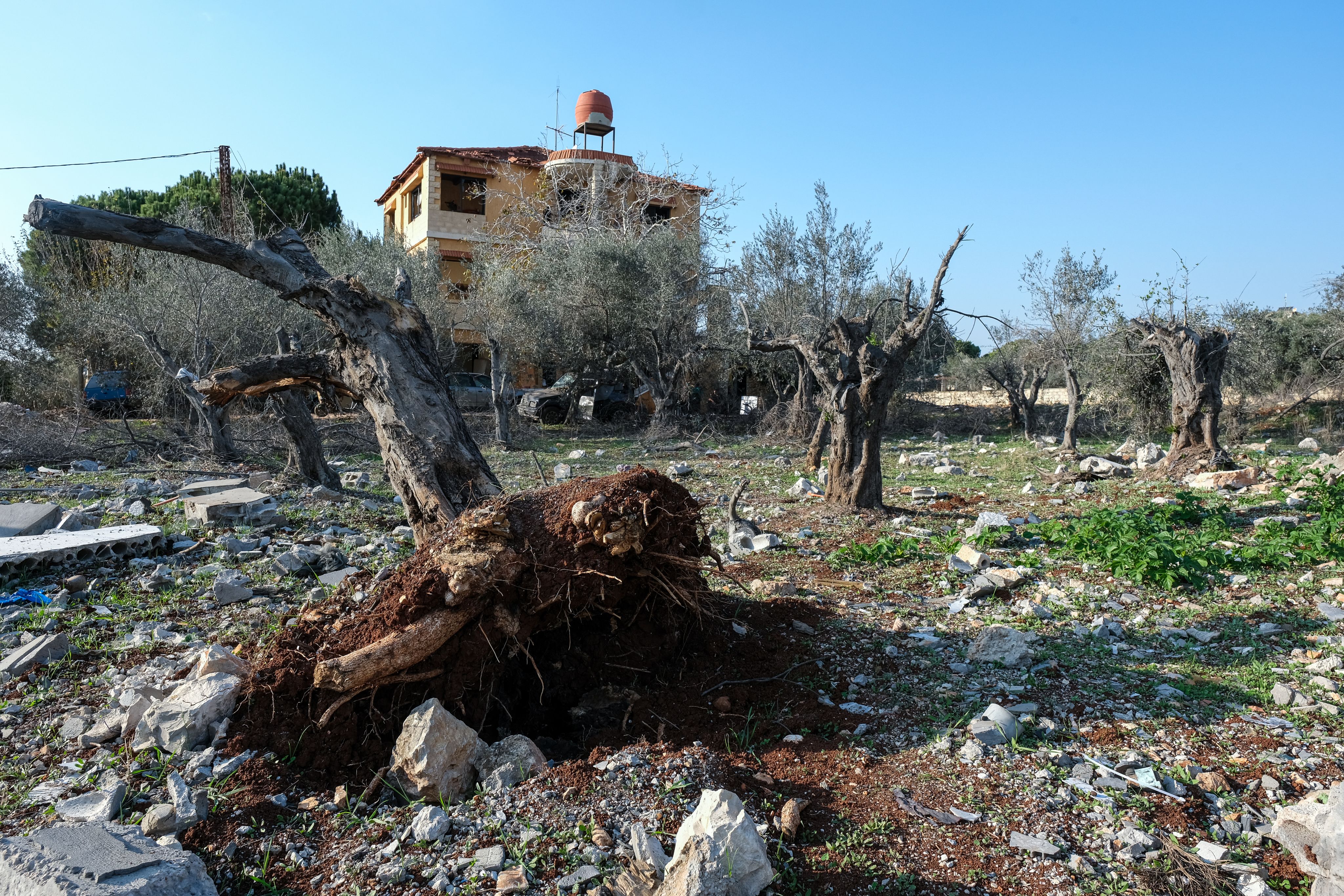
Olive trees in Ismail’s field in southern Lebanon are left scorched by fire after a nearby Israeli shelling. Photo: Zaynab Mayladan/NRC
Olive trees in Ismail’s field in southern Lebanon are left scorched by fire after a nearby Israeli shelling. Photo: Zaynab Mayladan/NRC
Ismail had also recently opened a provision shop, a business that sold preserved goods and showcased local produce. “I put so much love into it – a beautiful wooden decoration, everything planned carefully. It cost me $10,000, but it’s all gone now,” he says, his voice heavy with loss.
When the war began, Ismail sent his wife and children to safety but stayed behind to help those in need. “I volunteered in rescue efforts and tended to the wounded. I couldn’t leave my town; it’s my home. I came close to death many times because of the Israeli missiles,” he recounts.
Finding skilled labour has become another challenge for farmers across the country. “The Syrian workers I relied on for years have returned to Syria. Now, I need to find new workers and train them. It is a slow process,” Ismail says.
Ismail walks us through one of his olive fields, where the sight of the burnt groves is a constant reminder of the war’s toll. “This land has endured so much, but we’ll find a way to start over,” he concludes.
Poisoned land
Life in the southern border villages has been fraught with tension since the war started in October 2023. Over 700 homes and agricultural structures have been destroyed or damaged, according to United Nations reports. White phosphorus attacks in 2023 poisoned large swaths of farmable land, rendering it infertile for years to come. A witness from the Lebanese Civil Defense, who was responding to crises in multiple southern border villages, reported to the Norwegian Refugee Council (NRC) that olive groves were specifically targeted.

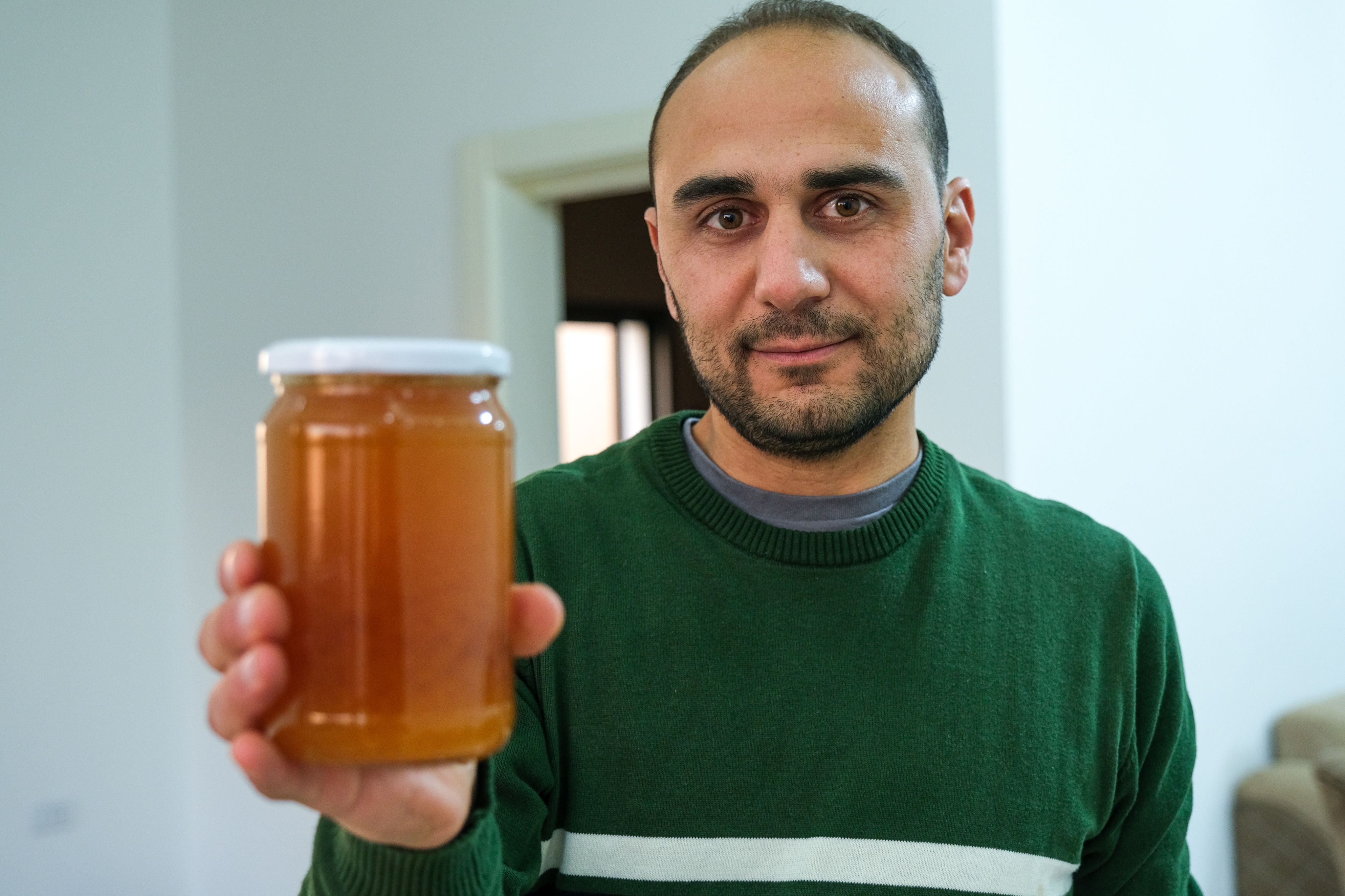
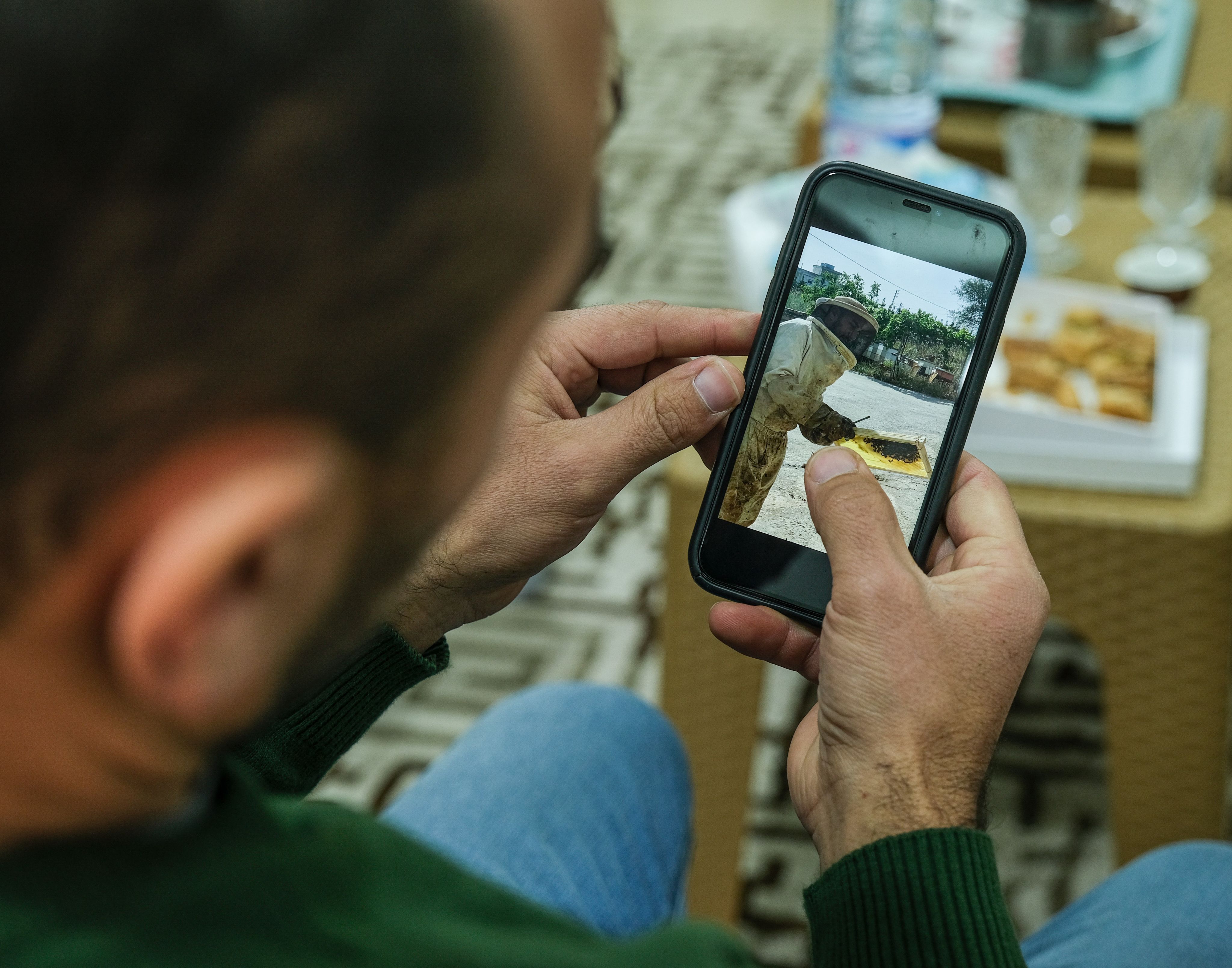
Ibrahim holds honey he extracted a year ago, before he was forced to flee his hometown. Photo: Zaynab Mayladan/NRC
Ibrahim holds honey he extracted a year ago, before he was forced to flee his hometown. Photo: Zaynab Mayladan/NRC
“Israeli forces were deliberately attacking olive fields with phosphorus. Whenever we tried to extinguish the fires, they would hit near us to force us away. Even when we managed to put out the fire, they would strike again and reignite it, sometimes burning the same field three times in a single day. It was intentional with no purpose other than to destroy the crops,” they said.
Mays El Jabal, along with many other villages on the southern border, has endured constant shelling, with houses destroyed, groves burnt and uncertainty about what the next day would bring.
“The war started just as the olive harvest was beginning. Only a few people managed to gather their crops before the shelling intensified,” Ibrahim recalls. A Lebanese farmer and beekeeper from Mays El Jabal, he currently resides in Deir Zahrane in southern Lebanon, near the Litani River.
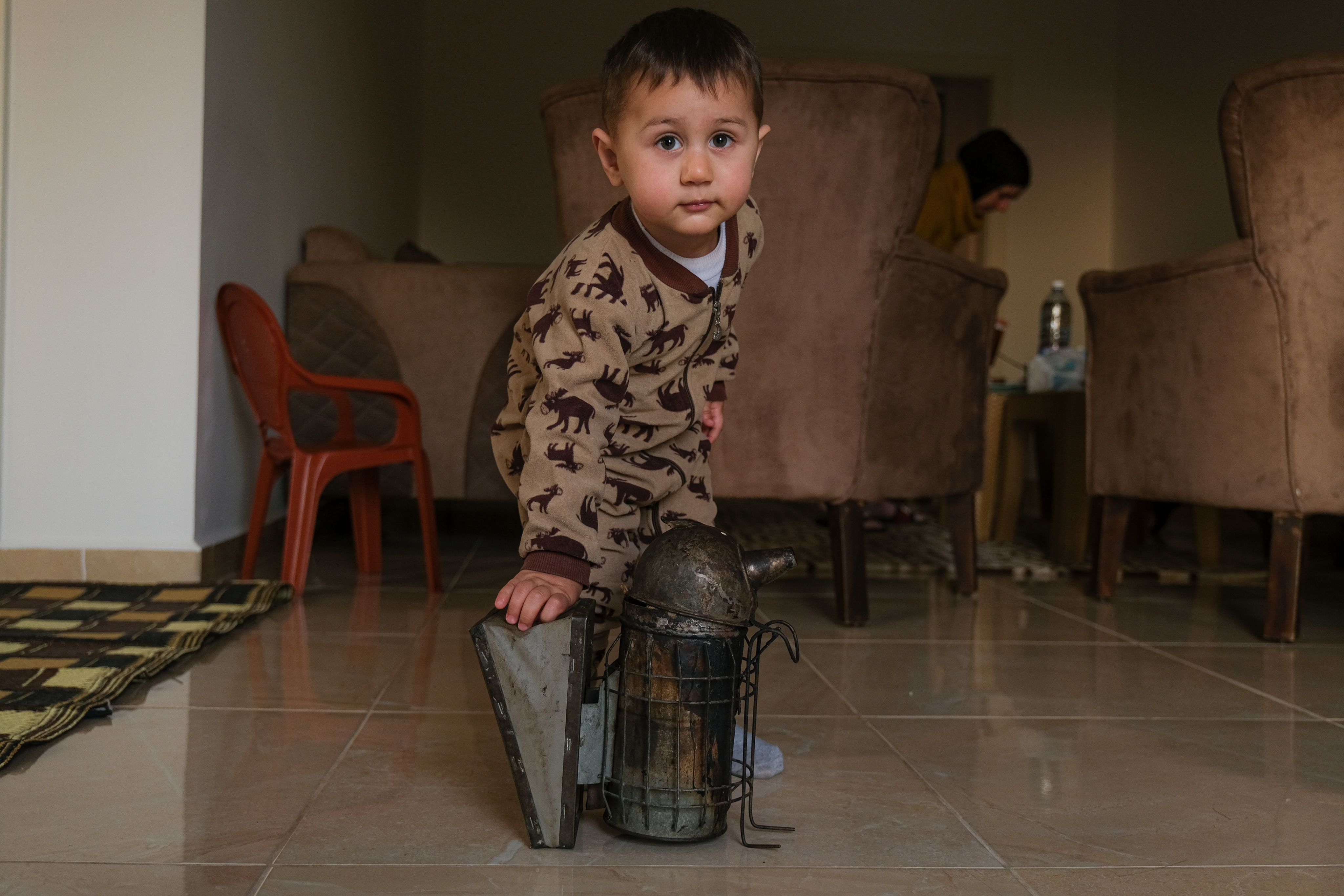
Ibrahim’s two-year-old son holds his father’s bee smoker in their second home since being displaced. Photo: Zaynab Mayladan/NRC
Ibrahim’s two-year-old son holds his father’s bee smoker in their second home since being displaced. Photo: Zaynab Mayladan/NRC
Even during the one-week ceasefire in October 2023, many farmers avoided their fields, fearing sniper fire. “My parents’ olive groves are right on the border. They couldn’t go near them because Israeli soldiers were still shooting. And those who did manage to pick olives found them tasteless – the soil had already been poisoned,” he says.
For Ibrahim, the challenges extended beyond olive farming. “I had 27 hives before the war. When I returned during the previous ceasefire, I found only eight left. The bees had fled, and even those that remained were weak. I moved them to a safer village, but now, only five are alive,” he recounts sadly.
“The air was toxic, the smell was unbearable. Even the bees knew it wasn’t safe.”

A year of displacement
Ibrahim and his family have been displaced three times. First, they stayed in Chaqra, just 6km from his hometown, to monitor his hives. They then fled to Deir Zahrane after shelling in 2023, before eventually relocating to Tripoli in northern Lebanon during the two-month war. After the ceasefire, they returned to Deir Zahrane, 43km from Mays El Jabal, to stay as close as possible to their original home.
“Some trees in our village, which had been planted by our grandparents over 200 years ago, are now being uprooted by Israeli bulldozers,”

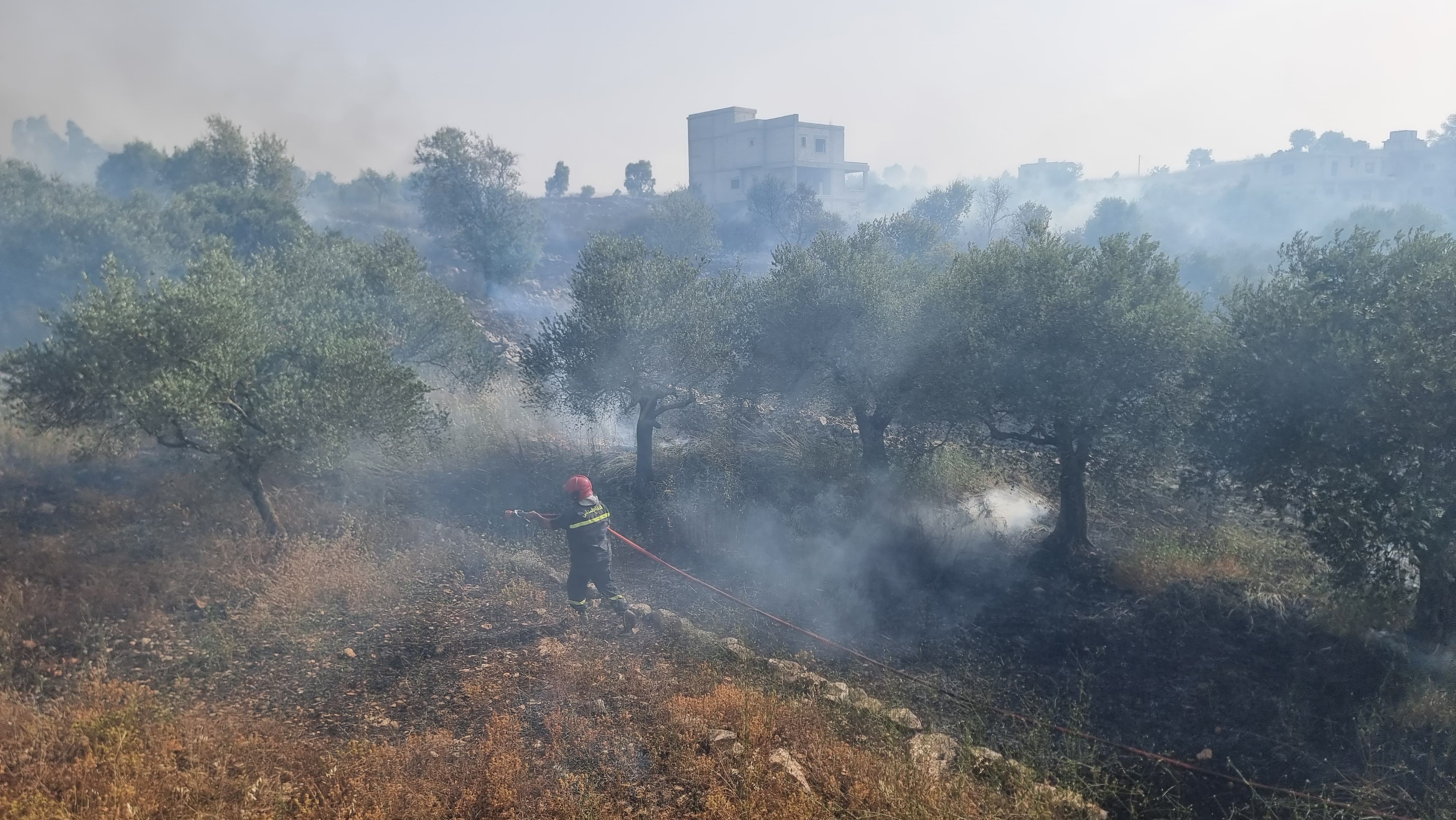
A Lebanese Civil Defense Officer extinguishes a fire in an olive field in Blida, a southern border village, following an Israeli strike. Photo: NRC
A Lebanese Civil Defense Officer extinguishes a fire in an olive field in Blida, a southern border village, following an Israeli strike. Photo: NRC
“Some trees in our village, which had been planted by our grandparents over 200 years ago, are now being uprooted by Israeli bulldozers,” he says, his voice breaking. “Weeks ago, Israeli shelling targeted a Lebanese family harvesting olives, killing one person and injuring several others.”
Ibrahim, like most people from the border villages, cannot return home yet. Even after Israeli forces withdraw, the Lebanese army must clear the lands of mines. “Even when we return, rebuilding will take years. Our houses are destroyed, there’s no electricity, water or infrastructure. Plus the soil is poisoned, and new trees won’t bear fruit for at least five years,” he explains.

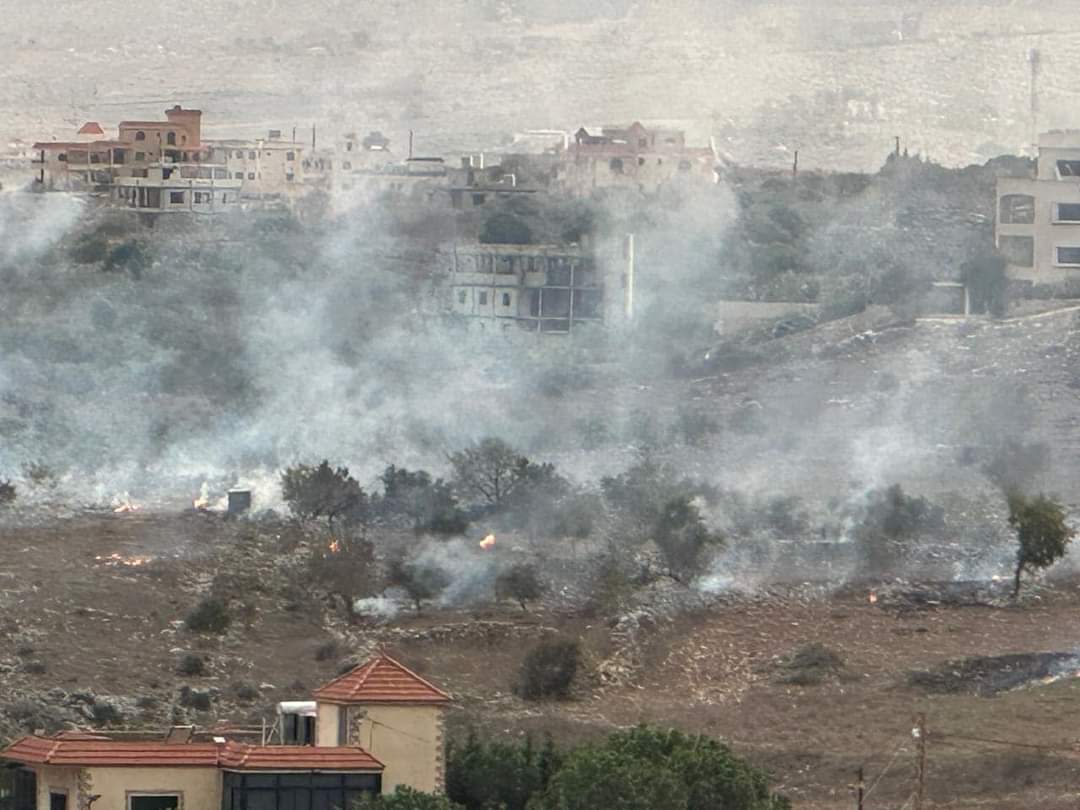
An olive field engulfed in flames after Israeli attacks on Mays El Jabal, near the border in Southern Lebanon. Photo: NRC
An olive field engulfed in flames after Israeli attacks on Mays El Jabal, near the border in Southern Lebanon. Photo: NRC
Ibrahim was newly married when the war began, and now his son has just turned two. The family has been displaced for over a year. “My bees, my income, my family’s legacy – all of it has been affected,” he says. “Food isn’t enough. Without specific support to rebuild our fields, hives and lives, we’ll be ruined.”
A country-wide struggle
These losses aren’t unique to southern Lebanon. Farmers across the country are enduring similar struggles.
Ali, a 74-year-old farmer from Yohmor in West Bekaa, has spent his entire life cultivating the land his ancestors entrusted to him. “Farming is my only occupation and profession,” Ali says, sitting outside the home he has temporarily rented while being displaced due to the war. “We rely on the season for our income, but this year, the season is gone. Not just mine, but everyone’s crops have been lost.”
Ali’s connection to his land runs deep. He inherited four olive groves from his father, who had received them from his grandfather. “Our land is kind and its products are kinder, but now, even I, who used to produce 30 tanks of olive oil a year, am using cooking oil to eat. Can you imagine?” he says.
“Last year, southern farmers were buying from us and this year we are in the same situation.”
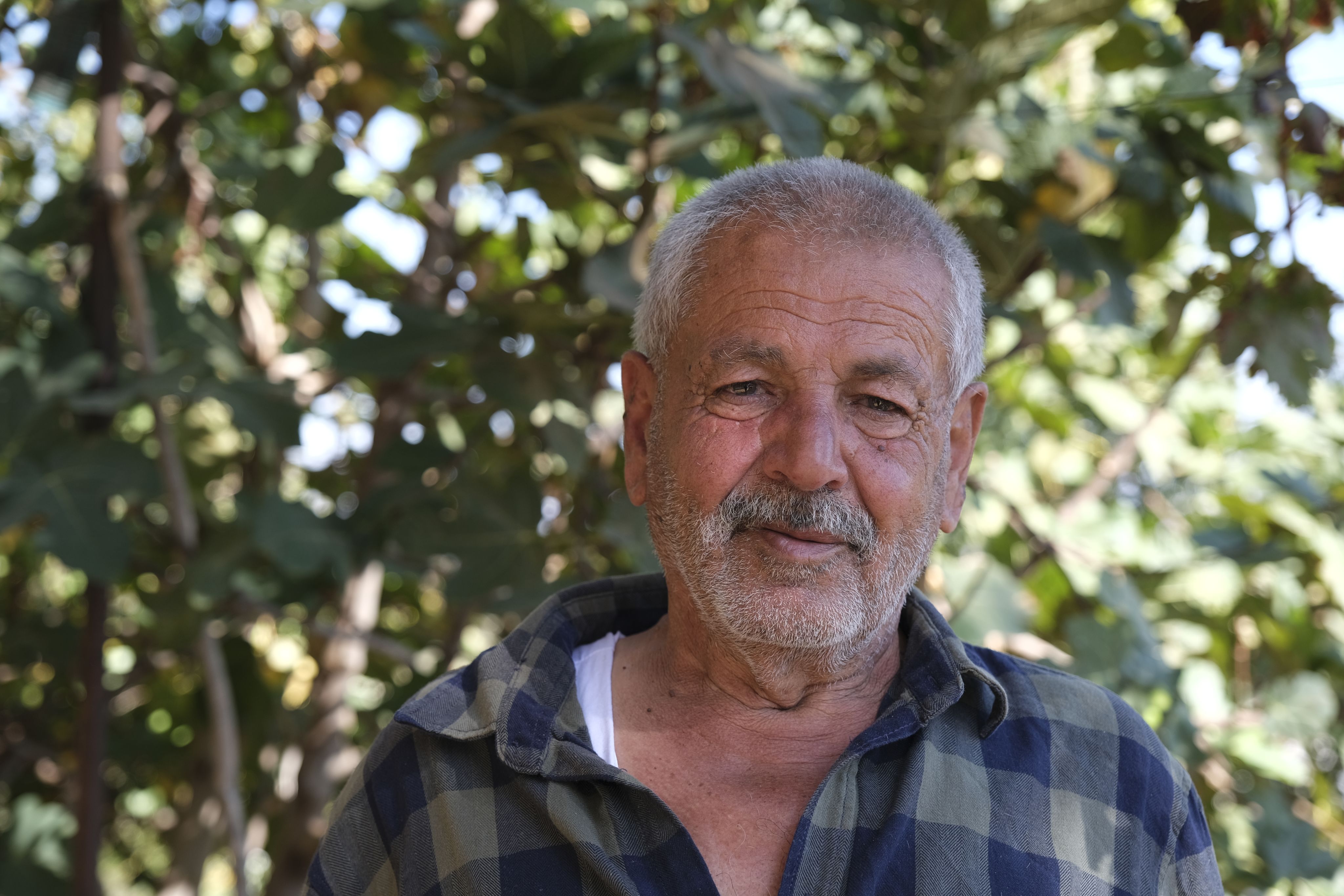
Ali stands in the shared house where he is living in Saadnayel, Bekaa Valley. Photo: Zaynab Mayladan/NRC
Ali stands in the shared house where he is living in Saadnayel, Bekaa Valley. Photo: Zaynab Mayladan/NRC
The war has changed everything for Ali. “The shelling doesn’t just break trees; it burns them. If a tree is completely lost, I’ll have to replant, but even then, the new tree won’t be the same as the 70-year-old olive trees my father planted, or the 100-year-old ones my grandfather raised.”
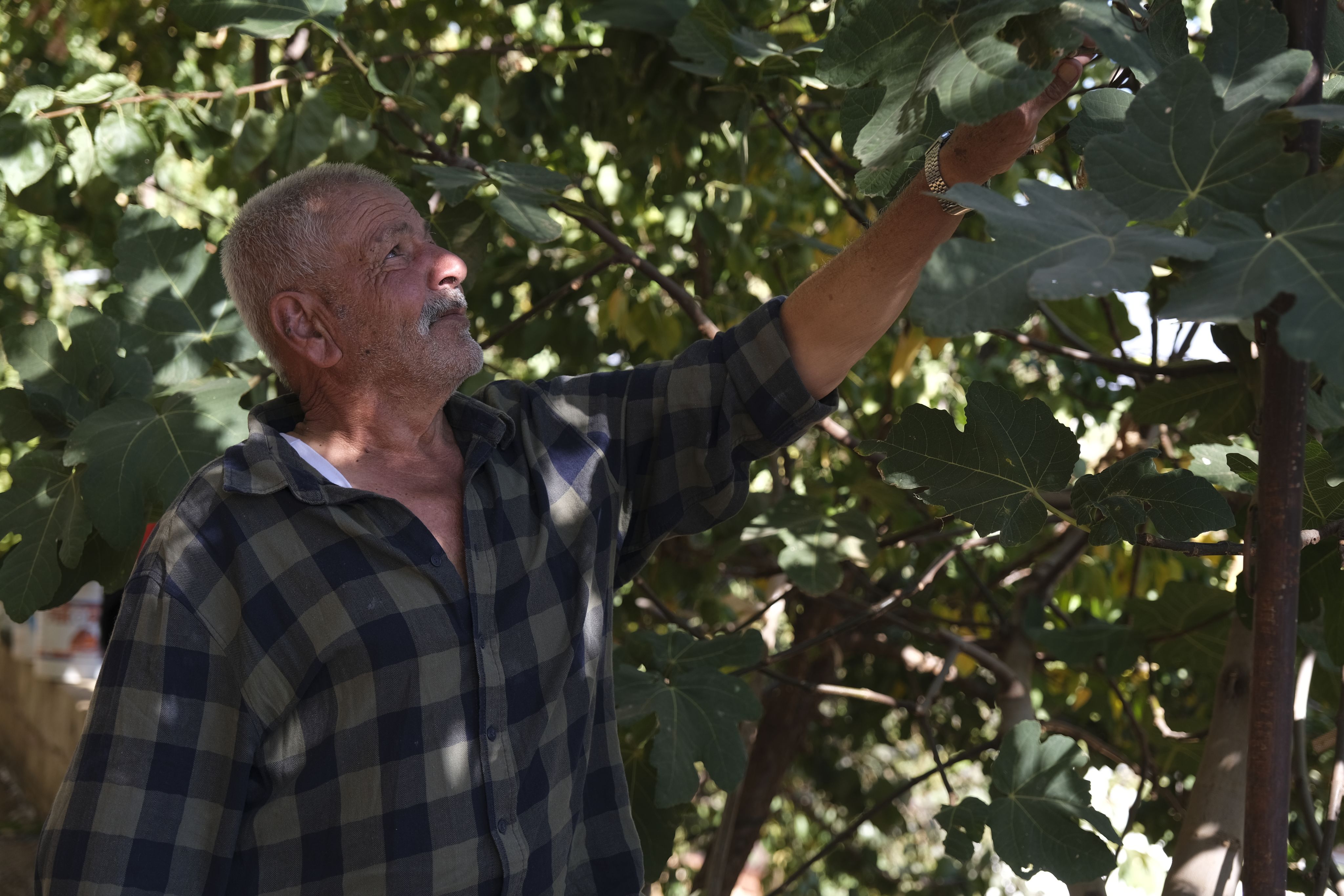
Before 2006, many in West Bekaa also cultivated grains such as wheat and barley. “We used to plant grains, like lentils, wheat and barley, but after the 2006 Israeli war on Lebanon, the land stopped producing grains. It’s poisoned, and only olives and figs have survived,” Ali explains.
In the previous year, farmers from southern Lebanon who had lost their olives due to earlier shelling would buy olives from Bekaa’s groves. “Now, we’re in the same position,” Ali says, shaking his head. “Where can we buy olives this time? The devastation is everywhere.”
A long and costly road for Lebanon’s farmers
The emotional toll of seeing centuries of family heritage destroyed weighs heavily on the farmers. “Farming is their identity. To abandon it would mean losing a part of themselves,” says Khaled Sleem, an agroecologist and agroforestry expert who specialises in agricultural recovery efforts. He emphasises the importance of providing tangible aid to farmers who have been affected by the war.
“For these farmers, the land is more than just a livelihood. It is their past, their present and their hope for a better future.”
“The war has affected the agriculture directly. Farmers cannot access their fields to irrigate, weed or treat diseases. When the land is neglected, its productivity declines rapidly. In addition, weapons have devastated the soil’s microbiome and contaminated crops.” Khaled explains. Restoring such land requires deep tilling, heavy irrigation and substantial composting – a process that takes years.
Khaled highlights the resilience of olive trees, especially ancient ones. “Even if burnt, olive trees can regenerate from dormant buds beneath the soil. However, if the trunk is destroyed, it takes at least five years to yield any fruit, and even longer to match the quality of older trees,” he says.
Farmers need immediate, large-scale support and tangible aid to restore their fields. “Composting units in every village, biological treatments for diseases and access to affordable organic fertilisers could make a huge difference,” Khaled suggests.
Still, despite the uncertainty, Khaled concludes that Lebanese farmers are incredibly resilient. “The moment they’re able to return to their fields, they will start working. They just need the right support to rebuild their livelihoods.”

 Built with Shorthand